

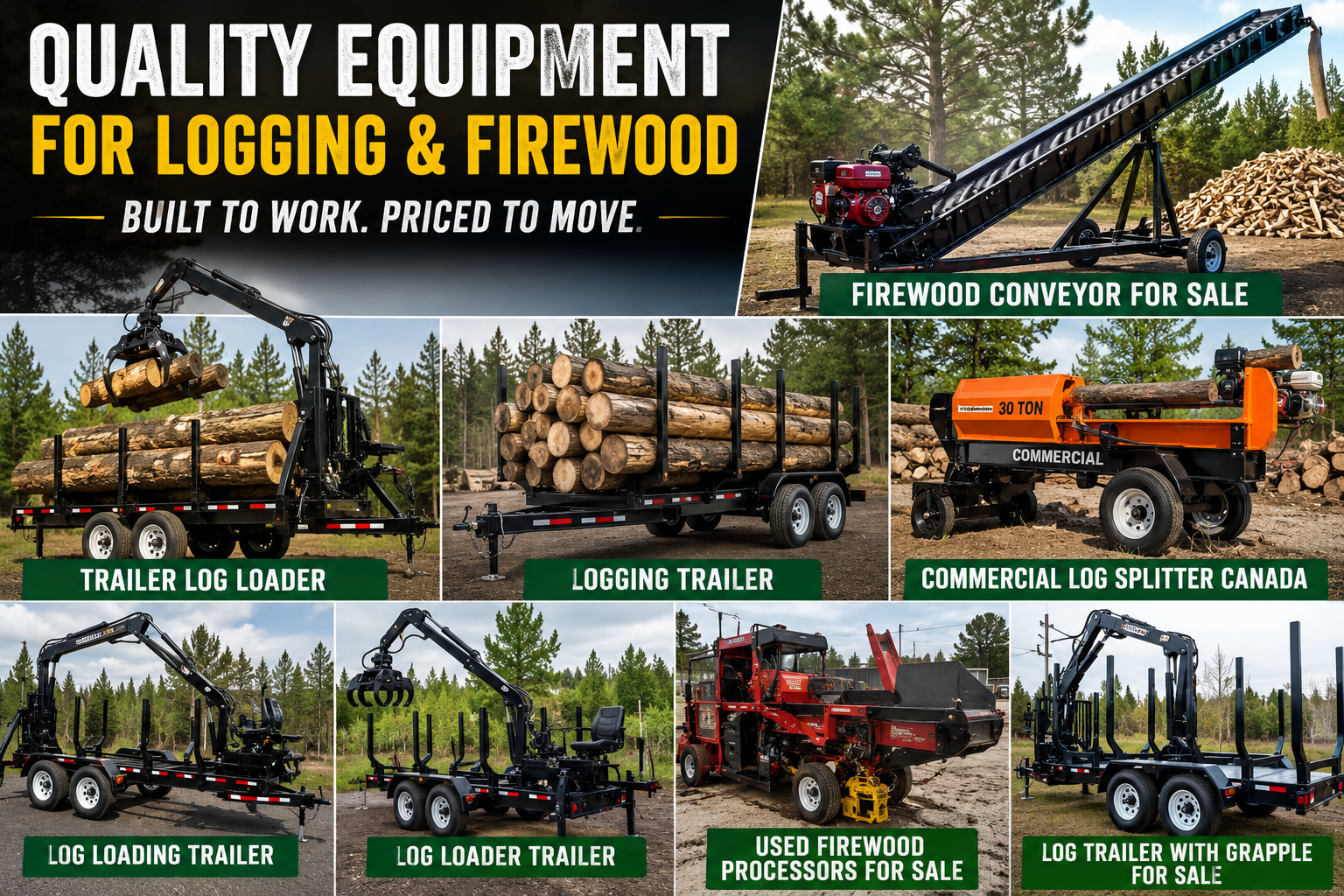
Moving logs from the forest to a processing site requires equipment that combines strength, stability, and convenience. A log loading trailer is designed to simplify this process by allowing operators to transport and load timber with greater efficiency. Whether used for forestry work, land management, or firewood production, choosing the right trailer can significantly improve productivity.
If you are considering investing in a log loading trailer, understanding its features, benefits, and maintenance requirements will help you make a well-informed decision.
What Is a Log Loading Trailer?
A log loading trailer is a specialized trailer equipped to carry logs while supporting efficient loading and unloading. Many models include integrated lifting systems or are designed to work alongside loading equipment, making timber handling faster and more organized.
Instead of relying on multiple machines or extensive manual labor, operators can streamline the entire transportation process.
Benefits of Using a Log Loading Trailer
Adding a log loading trailer to your operation offers several practical advantages.
Increased Efficiency
One of the biggest benefits is reducing the time required to move timber.
A well-designed trailer allows operators to:
- Load logs more quickly
- Transport larger volumes
- Reduce manual handling
- Improve overall workflow
Greater efficiency means more work can be completed in less time.
Better Organization
A log loading trailer keeps timber neatly arranged during transport.
Organized loads improve:
- Loading speed
- Unloading efficiency
- Storage preparation
- Workplace safety
Proper organization also minimizes unnecessary repositioning of logs.
Important Features to Consider
Choosing the right log loading trailer requires evaluating several key features.
Load Capacity
Every trailer has a maximum carrying capacity.
Select a model that matches:
- Average log weight
- Daily hauling volume
- Towing vehicle capability
- Transportation distance
Proper capacity helps maintain safe operation.
Strong Frame Construction
A reinforced frame provides the durability needed for demanding forestry work.
Look for trailers featuring:
- Heavy-duty structural components
- Reinforced supports
- Durable welds
- Stable chassis design
Strong construction contributes to long service life.
Adjustable Stakes
Adjustable log stakes help secure timber of varying sizes.
Flexible stake positioning allows operators to transport different log lengths safely while maximizing trailer space.
Common Uses
A log loading trailer serves many different applications.
Popular uses include:
Timber Harvesting
Moving freshly cut logs from forested areas remains one of the trailer’s primary functions.
Firewood Processing
Many operators transport logs to splitting locations before processing them into firewood.
Property Maintenance
Landowners often use a log loading trailer when clearing storm-damaged trees or managing wooded acreage.
Its versatility makes it useful throughout the year.
Selecting the Right Trailer
Every operation has unique transportation requirements.
Before purchasing a log loading trailer, consider several important factors.
Daily Production
Estimate:
- Number of loads
- Average log size
- Transportation frequency
- Seasonal workload
Higher production often requires trailers with greater capacity and stronger construction.
Terrain Conditions
Work environments influence equipment performance.
Trailers used on uneven forest trails should offer excellent stability and reliable suspension for improved handling.
Maintenance Tips
Routine maintenance helps extend the life of a log loading trailer.
Inspect Tires and Wheels
Regularly check:
- Tire pressure
- Tread wear
- Wheel bearings
- Lug nuts
Well-maintained wheels improve towing safety.
Examine Structural Components
Inspect:
- Frame condition
- Weld integrity
- Stake mounts
- Hitch assembly
Repairing minor damage early prevents larger issues later.
Keep Equipment Clean
Removing mud, bark, and debris after use helps reduce corrosion while making inspections easier.
Consistent cleaning contributes to longer equipment life.
Improving Productivity
A properly organized operation maximizes the value of a log loading trailer.
Helpful strategies include:
- Planning efficient hauling routes
- Sorting logs before loading
- Balancing trailer loads
- Performing regular maintenance
These practices reduce delays while improving overall efficiency.
Safety Considerations
Safe transportation should always remain a priority.
Operators should:
- Secure every load properly
- Stay within weight limits
- Inspect equipment before each trip
- Drive carefully on uneven terrain
Following these guidelines protects both equipment and personnel.
Conclusion
A dependable log loading trailer makes timber transportation more efficient by reducing manual labor and improving workflow. Selecting the right capacity, maintaining the trailer regularly, and following safe loading practices ensure reliable performance for years to come. Whether supporting forestry work, land management, or firewood production, a quality log loading trailer provides lasting value and dependable productivity.