

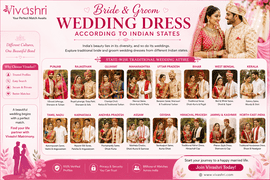
India is known for its rich cultural diversity, and Indian weddings are one of the best examples of this beautiful heritage. From the colorful lehengas of Rajasthan and Punjab to the elegant Kanchipuram sarees of Tamil Nadu and the traditional Kasavu sarees of Kerala, wedding dresses in India change dramatically from one state to another.
The traditional wedding dress worn by a bride and groom is not simply a fashion choice. It often represents the culture, traditions, craftsmanship, history, and identity of a particular region. Different fabrics, embroidery styles, colors, jewelry, turbans, sarees, lehengas, dhotis, and other traditional outfits make every Indian wedding unique.
If you are planning your wedding or simply want to understand traditional bride and groom wedding dresses according to Indian states, this complete guide will help you explore popular regional wedding attire across India.
Why Is Traditional Wedding Dress Important in India?
Indian wedding clothing has a deep connection with culture and family traditions. A wedding outfit can reflect the region a person belongs to, the customs followed by the family, and the significance of the wedding ceremony.
Traditional attire also showcases India’s textile heritage. Silk sarees, hand embroidery, mirror work, zari, Phulkari, Banarasi weaving, Paithani, Sambalpuri textiles, and other regional crafts continue to play an important role in Indian weddings.
At the same time, modern couples increasingly combine traditional outfits with contemporary designs. A bride may choose a traditional saree for the wedding ceremony and a designer lehenga for the reception, while a groom may combine a traditional kurta or sherwani with modern accessories.
State-Wise Bride and Groom Wedding Dresses in India
Let’s explore some of the most popular traditional wedding outfits worn by brides and grooms across different Indian states.
1. Punjab – Vibrant and Elegant Wedding Attire
Punjabi weddings are famous for their energetic celebrations, colorful traditions, and vibrant fashion.
Punjabi Bride
A Punjabi bride commonly chooses a heavily embroidered lehenga choli, salwar suit, or other richly decorated bridal outfit. Red, pink, maroon, and other festive shades are popular choices.
Phulkari embroidery is strongly associated with Punjabi textile traditions and can add a distinctive regional touch to bridal attire.
Punjabi Groom
The groom traditionally wears a kurta pajama, sherwani, or achkan, often paired with a colorful turban or pagri. A traditional Punjabi groom’s look may also include a sehra during the wedding ceremony.
2. Rajasthan – Royal Traditional Wedding Dress
Rajasthan’s royal history is beautifully reflected in its wedding fashion.
Rajasthani Bride
A traditional Rajasthani bride may wear a ghagra choli with an odhni, featuring embroidery, mirror work, gota patti, and other decorative details.
Bright colors and intricate designs are commonly associated with Rajasthani festive clothing.
Rajasthani Groom
The groom may wear a sherwani, achkan, or traditional kurta-dhoti combination, along with a colorful safa or pagri.
The complete look often creates a royal appearance inspired by Rajasthan’s cultural heritage.
3. Gujarat – Colorful Chaniya Choli and Traditional Groom Wear
Gujarati weddings are known for their colorful celebrations and distinctive clothing traditions.
Gujarati Bride
The traditional chaniya choli is one of the most recognizable Gujarati outfits. It can feature mirror work, embroidery, vibrant colors, and decorative patterns.
For the wedding ceremony, brides may also choose traditional sarees such as Panetar or Gharchola depending on family and community customs.
Gujarati Groom
A Gujarati groom may wear a kediyu, kurta, dhoti, or sherwani, often complemented by a traditional headpiece or turban.
4. Maharashtra – Nauvari and Paithani Traditions
Maharashtrian wedding fashion combines elegance, tradition, and distinctive draping styles.
Maharashtrian Bride
The Nauvari saree is a well-known traditional Maharashtrian outfit. Brides may also wear Paithani sarees featuring rich colors and distinctive woven designs.
Traditional jewelry such as the nath and other Maharashtrian ornaments can complete the bridal look.
Maharashtrian Groom
The groom traditionally wears dhoti-kurta, often accompanied by a traditional pheta or pagdi. A modern Maharashtrian groom may also choose a sherwani for certain wedding functions.
5. Uttar Pradesh – Banarasi Saree and Sherwani
Uttar Pradesh has a rich textile and cultural heritage, with Banarasi silk being particularly famous.
Bride
A bride from Uttar Pradesh may choose a Banarasi silk saree, lehenga, or traditional bridal outfit. Rich zari work and traditional patterns can give the outfit an elegant appearance.
Groom
The groom may wear a sherwani, kurta pajama, or achkan, sometimes paired with a safa or turban.
Banarasi textiles are especially popular for wedding sarees and festive clothing.
6. Bihar – Traditional Sarees and Groom’s Sherwani
Bihar has its own distinctive wedding traditions and clothing styles.
Bihari Bride
Traditional Bihari bridal fashion may include silk sarees, traditional sarees, or richly decorated bridal outfits. Red, maroon, green, and other festive shades are commonly seen in wedding celebrations.
Bihari Groom
A Bihari groom may traditionally wear a dhoti-kurta, while sherwani has also become a popular choice for contemporary weddings. A sehra or traditional headwear may complete the wedding look.
7. West Bengal – Red and White Bridal Tradition
Bengali weddings have one of India’s most recognizable bridal styles.
Bengali Bride
A traditional Bengali bride often wears a red or red-and-white saree, with Banarasi sarees being a popular choice for wedding ceremonies.
Traditional jewelry and the distinctive Bengali bridal headpiece add to the overall look.
Bengali Groom
The groom traditionally wears a dhoti with a Punjabi or kurta. A traditional mukut may be worn during the wedding ceremony.
8. Odisha – Sambalpuri and Traditional Wedding Attire
Odisha has a strong textile heritage, and regional fabrics are an important part of traditional clothing.
Odia Bride
An Odia bride may wear a Sambalpuri, Bomkai, or other traditional silk saree, depending on regional and family customs.
Traditional jewelry and an elegant hairstyle complete the bridal appearance.
Odia Groom
The groom may wear a dhoti-kurta or traditional sherwani, sometimes paired with a safa or other ceremonial headwear.
9. Assam – Mekhela Chador and Dhoti-Kurta
Assamese wedding clothing is strongly connected to the region’s textile traditions.
Assamese Bride
The Mekhela Chador is one of Assam’s most recognizable traditional outfits. Bridal versions may feature silk and traditional motifs.
Assamese Groom
The groom may wear a dhoti and kurta, accompanied by a traditional Assamese gamosa.
10. Kerala – Kasavu Saree and Mundu
Kerala is known for simple yet elegant traditional wedding clothing.
Kerala Bride
The Kasavu saree, generally recognized for its white or cream base with a golden border, is strongly associated with traditional Kerala celebrations.
Brides often pair the saree with traditional gold jewelry.
Kerala Groom
The traditional groom’s outfit is commonly a mundu, often worn with a shirt or traditional upper garment.
The overall style is elegant, minimal, and culturally distinctive.
11. Tamil Nadu – Kanchipuram Silk Saree and Veshti
Tamil Nadu has one of India’s most famous bridal textile traditions.
Tamil Bride
The Kanchipuram silk saree is a classic choice for Tamil weddings. Rich silk, zari borders, traditional motifs, and vibrant colors make these sarees especially popular for bridal ceremonies.
Tamil Groom
The groom commonly wears a veshti, often combined with a shirt or angavastram.
Gold jewelry and traditional accessories can complete the couple’s ceremonial appearance.
12. Karnataka – Silk Sarees and Traditional Dhoti
Karnataka’s wedding fashion includes several regional textile traditions.
Karnataka Bride
Brides may choose Mysore silk, Ilkal sarees, or other traditional silk sarees depending on regional and family preferences.
Karnataka Groom
A traditional groom may wear panche/dhoti with a shirt or angavastram. Sherwanis are also popular for modern wedding celebrations.
13. Andhra Pradesh and Telangana – Rich Silk Traditions
Andhra Pradesh and Telangana are known for beautiful handloom traditions.
Bride
Brides may choose Pochampally, Gadwal, or other traditional silk sarees for wedding functions.
These sarees are known for distinctive weaving techniques, colors, and patterns.
Groom
The groom may wear dhoti-kurta, pancha, or sherwani, depending on the ceremony and personal preference.
14. Madhya Pradesh – Traditional Sarees and Festive Groom Wear
Madhya Pradesh has a diverse textile heritage.
Bride
A bride may choose traditional sarees such as Chanderi or Maheshwari sarees, or a contemporary bridal lehenga inspired by regional designs.
Groom
The groom may choose a dhoti-kurta, traditional jacket, or sherwani.
15. Himachal Pradesh – Traditional Mountain Wedding Style
Himachal Pradesh has distinctive clothing influenced by its mountainous environment and local traditions.
Bride
Traditional bridal clothing can include regional dresses, embroidered garments, shawls, and traditional accessories.
Groom
The groom may wear traditional clothing combined with a Himachali cap or regional headwear.
The outfit is often designed to provide both cultural identity and comfort in the mountain climate.
16. Jammu & Kashmir – Elegant Pheran-Inspired Attire
Kashmiri culture has a distinctive textile and clothing heritage.
Bride
Traditional Kashmiri bridal fashion can include pheran-inspired garments, richly embroidered fabrics, shawls, and traditional jewelry.
Groom
A groom may wear traditional Kashmiri attire or combine regional elements with a sherwani or other formal wedding outfit.
17. Goa – Traditional and Contemporary Wedding Fashion
Goa’s wedding fashion reflects its multicultural heritage.
Depending on family, religion, and ceremony, brides may choose traditional sarees, gowns, or Indo-Western outfits, while grooms may wear formal suits, traditional Indian attire, or combinations of both.
This makes Goan weddings particularly diverse from a fashion perspective.
18. Jharkhand and Chhattisgarh – Regional Textile Traditions
Jharkhand and Chhattisgarh have rich tribal and handloom traditions.
Bride
Traditional sarees and locally woven fabrics can be incorporated into wedding attire, often complemented by distinctive jewelry.
Groom
Grooms may wear dhoti-kurta, traditional jackets, or modern formalwear depending on community and ceremony.
19. North-East India – Unique Cultural Wedding Clothing
The North-Eastern states of India have some of the country’s most diverse traditional clothing.
Bride
Depending on the state and community, brides may wear garments such as Mekhela Chador, Phanek, Puan, Jainsem, Rignai, and other traditional handwoven outfits.
Groom
Grooms may wear traditional shawls, jackets, dhotis, wraparound garments, or community-specific ceremonial clothing.
The designs often showcase handwoven textiles and distinctive regional patterns.
Modern Indian Wedding Fashion: Tradition Meets Style
Today’s couples are not limited to one traditional outfit. Many brides and grooms combine regional traditions with modern fashion.
For example:
- A bride can wear a traditional saree for the wedding and a designer lehenga for the reception.
- A groom can wear a traditional dhoti during the ceremony and a sherwani for another function.
- Couples can coordinate their outfits through complementary colors.
- Traditional jewelry can be combined with modern accessories.
- Regional fabrics can be incorporated into contemporary designs.
This combination of traditional and modern fashion allows couples to celebrate their heritage while expressing their personal style.
How to Choose the Right Wedding Dress?
Choosing a wedding outfit involves more than selecting a beautiful design. Consider these factors before making your decision.
1. Understand Your Wedding Tradition
First, learn about the traditional attire associated with your state, community, and ceremony.
2. Consider Comfort
Indian weddings can involve several hours of rituals, photography, dancing, and celebrations. Choose an outfit that allows comfortable movement.
3. Select the Right Fabric
Silk, cotton, velvet, chiffon, georgette, brocade, and other fabrics can be selected according to the season and wedding function.
4. Coordinate Bride and Groom Outfits
The couple does not necessarily need identical outfits. Instead, choose complementary colors, patterns, or accessories.
5. Match the Outfit With the Wedding Function
Different functions may require different styles:
- Haldi – comfortable and colorful outfits
- Mehndi – festive ethnic wear
- Sangeet – stylish and comfortable outfits
- Wedding – traditional bridal and groom attire
- Reception – designer or contemporary formalwear
6. Add Regional Accessories
Traditional jewelry, turbans, shawls, dupattas, footwear, and other accessories can make the outfit more authentic and memorable.
Traditional Wedding Dress in India: A Celebration of Diversity
The biggest beauty of Indian wedding fashion is its diversity. A wedding outfit from Kerala can look completely different from one in Punjab, while a Bengali bridal saree can have a very different appearance from a Tamil Kanchipuram silk saree.
Yet all these outfits share something important: they represent family, culture, tradition, celebration, and the beginning of a new chapter in life.
Whether you prefer a traditional saree, royal lehenga, elegant sherwani, classic dhoti, or a modern Indo-Western outfit, Indian wedding fashion provides countless possibilities.
Find Your Perfect Life Partner with Vivashri
A beautiful wedding begins with finding the right person to share your life with. If you are looking for a suitable bride or groom in India, Vivashri provides an online matrimony platform where individuals can explore matrimonial profiles and search for potential life partners.
Finding a life partner is not only about appearance or social background. Compatibility, values, communication, family expectations, lifestyle, and future goals are also important when making such an important decision.
Explore matrimonial profiles, understand your preferences, and begin your journey toward finding a compatible life partner.
Start your matrimonial journey with Vivashri today.
Frequently Asked Questions (FAQs)
What is the traditional wedding dress of Indian brides?
There is no single traditional wedding dress for all Indian brides. Wedding attire varies by state, community, religion, and family tradition. Popular choices include sarees, lehengas, ghagra cholis, Mekhela Chador, and other regional outfits.
What do Indian grooms traditionally wear?
Indian grooms may wear sherwanis, dhoti-kurta, kurta pajama, veshti, mundu, achkan, traditional jackets, or region-specific attire.
Which saree is famous for South Indian weddings?
Kanchipuram silk sarees are particularly famous for Tamil weddings, while Kasavu sarees are strongly associated with traditional Kerala wedding celebrations.
What do Punjabi brides traditionally wear?
Punjabi brides commonly wear richly decorated lehengas, salwar suits, or other festive bridal outfits, often featuring embroidery and vibrant colors.
What do Bengali brides wear at weddings?
Bengali brides commonly wear traditional sarees, frequently in red or red-and-white combinations, along with traditional jewelry and ceremonial accessories.
What should a groom wear for an Indian wedding?
A groom can choose a sherwani, kurta pajama, dhoti-kurta, regional traditional outfit, or formal Indo-Western attire depending on the wedding ceremony and cultural background.
Can couples combine traditional and modern wedding clothes?
Yes. Many modern Indian couples combine traditional regional clothing with contemporary designs to create a personalized wedding look.
Conclusion
Bride and groom wedding dresses according to Indian states represent the incredible cultural diversity of India. From Punjab’s vibrant outfits and Rajasthan’s royal designs to Tamil Nadu’s Kanchipuram silk, Kerala’s Kasavu saree, Assam’s Mekhela Chador, and Maharashtra’s traditional sarees, every region offers something unique.
Your wedding outfit should make you feel confident, comfortable, and connected to your traditions. Whether you choose a completely traditional look or combine regional fashion with modern designs, the most important part of the celebration is the journey you begin together.
If you are searching for a suitable life partner, explore Vivashri Matrimony and take the next step toward finding someone who shares your values, expectations, and vision for the future.